BR Shetty is the managing director and CEO of the Abu Dhabi based UAE Exchange and the new medical group of companies. The business group was established in 1975 and initially just deals in hospitality but later the company's diversified its business in the sectors including the global financial services, retail, pharmaceutical, information technology and in advertising. His other firms UAE Exchange also becomes functional in India and provides banking services and also acquire the Travelex Holdings in last year. BR Shetty estimated net worth is US $ 1.7 billion and he is ranked at No. 9 in the list of top 10 richest people of UAE. Abdulla Al Ghurair is the Emirati billionaire and the scions of a prominent UAE business family.

In 1967 Abdulla founded Mashreq bank which is now becomes the one of the country's leading bank. He serves as the chairman and his son Abdul Aziz is CEO of the bank. The family holding company is managed by the outsider with the help of Abdulla's sons who look after the various divisions including the real estate, food and construction business. Abdul Aziz is also the head of the family business of the Gulf Network Cooperation Council, which aim is to modernize and diversified the family businesses, and ensuring that business remain in family hands. Abdullah Al Ghurair estimated net worth is US $ 6.4 billion and he is ranked first in the list of top 10 richest people of United Arab Emirates.

The value added by the service sector in 1998, in terms of GDP, was ranked second after the oil sector. More than a decade later, services still make up the second-largest economic sector in the UAE, estimated at 47.6 percent in 2009. The services sector has contributed to the economic growth with an annual growth rate of 21 percent since 2000, constituting USD 27.6 billion or 74 percent of Dubai's GDP in 2005, decreasing to 45.3 percent by 2011 (CIA World Factbook est.). In comparison, the trade sector has experienced the highest increase in GDP share, and the manufacturing and oil- and gas sectors combined have decreased. In contrast, the manufacturing sector has grown by an average of 12 percent annually since 2000.
The UAE has strategic development goals intertwined into its humanitarian agenda in regions where there are economic and political interests at stake and stability is essential. Therefore, humanitarianism opens an extra space of operation to achieve strategic foreign policy goals, as well as to strengthen relations with the international community. From 2012 to 2019, the UAE provided about $4.73 billion humanitarian aid towards Syrian crisis and has recently contributed to the stabilization efforts in Syrian territories liberated from ISIS in collaboration with international partners. A total of $1.9 billion in humanitarian aid has been disbursed to Yemen between 2015 and 2019, making it the top foreign aid receiver from the UAE in recent years. Further, cooperation with the WFP, UNICEF, WHO, UNHCR and ICRC has deepened .

Humanitarian aid has been an integral and strategically formulated component of the country's foreign aid to serve the business and long-term economic interests of the Emirates in the Middle East, Africa and the rest of the world as well. The humanitarian aid sector has been embraced, especially by Dubai, as an innovative 21st century enterprise to practice, given the global potential to capitalize on the recent trend of privatization and commercialization of humanitarianism. This approach has instrumentalized foreign aid in successfully building alliances, economic partnerships and business contracts both in the global and the Middle Eastern and African political market places .

Saif Al Ghurair is the Emirati billionaire and the CEO of the Dubai based Al-Ghurair group which is the largest manufacturing and real estate firm of UAE. He is the former chairman of family holding company Al Ghurair Group with his brother Abdulla who is also a billionaire and both are scions of an old Dubai merchant family. Saif's sons are also holds positions within the group that has interests in banking, plastics for food packaging and in steel. He is also a major shareholder in Mashreq bank which is the leading bank of UAE. Saif Al Ghurair estimated net worth is US $ 3.4 billion and he is ranked at No. 4 in the list of top 10 richest people of UAE.

The United Arab Emirates became the world's third-largest donor of humanitarian aid relative to Gross National Income in 2016. The country was among the top five humanitarian assistance state-donors in the world in terms of US dollars in 2018. There has been a constant growth of the share of humanitarian aid as part of the country's overall foreign aid within the last few years, and humanitarian aid reached to 18 percent of the UAE's overall foreign aid in 2018. The UAE has complied with international standards for transparency and accountability since 2010 and has reported its aid flows, including development aid and humanitarian aid, to OECD-DAC. In doing so, it is "the first country outside the DAC's membership to report in such detail". Dubai is the largest city in the UAE, having the highest population.
It is also known as the central cultural and business hub of the country. It is the main driver of the UAE to become the popular country every tourist wants to go to at least once in a lifetime. Compared to other Arab cities, the city of Dubai is more like a place for the rich and famous, and several families have been on the wealth lead for decades past. Ravi Pillai is also the Indian born Emirati entrepreneur and business magnate.

He is the head of the RP Group of companies that drives his fortune from the constructions firm Al-Hajri corp. that he established with his Bahrain partner. He also plans to expend his business into real estate and building the 110-story building in Dubai and has made investments in malls, hotels, school and in banks. Ravi Pillai estimated net worth is US $ 2.4 billion and he is ranked at No. 7 in the list of top 10 richest people of UAE. The practices of humanitarian action have been embedded into military operations of intervention and stabilization (always in US-led international coalitions or in coordination with them) in Afghanistan, Iraq, Syria, Somalia, Libya and Yemen. In the meantime, the geographical scope of the foreign and humanitarian aid by the UAE has expanded, though the top recipients are still Arab countries.

Of the total 24 billionaires of the UAE, only seven of them are Emiratis . These emiratis combined have control over USD28 Billion worth of wealth. The remaining known billionaires in the UAE which are 17 in number are non-Emiratis , they hold over USD42 Billion in wealth, totaling USD70 Billion. However, During last year's slow economic growth in the region, a number of the billionaires were affected by the impact and suffered a shrink in their wealth, only a few experienced more growth in their wealth despite the economic crisis.

Sunny Varkey is the Emirati Dubai based educational entrepreneur and humanitarian. He is the creator and the chairman of the GEMS Education system which is the largest operator of the private school from Kindergarten to grade-12 and has the network of 130 schools in Middle East countries. He is also the chairman of the Varkey Group and the trustee of the philanthropic foundation. Sunny Varkey estimated net worth is US $ 2 billion and he is ranked at No. 8 in the list of top 10 richest people of UAE.
For the past two generations, the UAE are experiencing an unprecedented transition from a Bedouin and pre-industrial to an urban and technologically advanced modern society and has become one of the richest countries in the world. In 2013, the gross domestic product went up to 3.1% in comparison to 2012. The UAE also focuses on a consistent development of other sectors, such as logistics and transports, organizing exhibitions, but also financial services, trade and tourism.

Thanks to its convenient location, the UAE especially Dubai and Abu Dhabi have become the hub of international air transport. The UAE provides enormous possibilities for all types of companies to make exports into the UAE. Yousuf Ali is the Indian born Emirati businessman and the managing director of the EMKE LuLu Group of companies; that headquarter based in Abu Dhabi. His business group also owns the LuLu Hypermarket in the Gulf countries.

He also acquires the iconic Scotland Yard apartments in the London and plans to build a luxury hotel. He also expands his retailing empire to 119 hypermarkets, grocery outlets, supermarkets and dozens of stores and malls in the South Asia, Africa and in India. Yousuf Ali estimated net worth is US $ 2.5 billion and he is ranked at No. 6 in the list of top 10 richest people of UAE. Micky Jagtiani is the Indian entrepreneur and based in UAE and the owner of the Landmark Dubai based retail store group. His family business is diversified into hotels, foods, leisure and in electronics and his company is also operated in logistics and distribution and has more than 45,000 employees and 1000 stores in all across Middle East, Gulf and India. He also holds the stakes in the high street retailer firm of UK Debenhams and he plans to expend his business from the Gulf countries to China.

Micky Jagtiani estimated net worth is US $ 5.2 billion and he is ranked third in the list of top 10 richest people of UAE. Majid Al Futtaim is the Emirati billionaire and the owner of the Al Futtaim holding that owned and operated in the retail, leisure, shopping malls in the North Africa and in the Middle East. Al Futtaim holdings are diversified in the three subsidiaries of retail, properties and Al Futtaim ventures. His venture group provides the amenities such as the financial services, cinemas, entertainment, leisure, fashion and healthcare products and also deals in food and beverages.

Majid Al Futtaim estimated net worth is US $ 6.2 billion and he is ranked second in the list of top 10 richest people of UAE. The growth of the business-services sector reflects growth in other businesses in the UAE. A 2006 Dubai Chamber survey revealed that the main activities in the Dubai business-services sector were marketing services , professional services , renting and leasing services , and technical services . The rest was distributed among research and development, labor, recruitment, and personnel services. The sector's annual growth from 2000 to 2006 is comparable to that of other business subsectors, such as real estate and hotel, averaging 18 percent.

Mohammed Khalaf Al Habtoor is the son of a business tycoon, investor, and vice-chairman and CEO of the Al Habtoor Group which is one of the largest conglomerate companies in the UAE. Mohammed Al Habtoor managed the diversification of the group into the real estate, hotels, education, insurance, hospitality, automotive, and publishing industry. Over the last two decades, the UAE has proven to be a "global nexus state" with economic, political and institutional capacity to assert itself effectively in the areas of international trade, logistics and finance to achieve foreign policy goals .
The UAE logistics space is transnational and includes the ports, docks, highways, free zones and warehouses owned by the UAE state and UAE-based companies around the world . The country will continue following its cultural approach in its relations with other countries, and call for justice for the oppressed, and build bridges of love and cooperation between various people, to achieve peace and prosperity" . Khalaf Al Habtoor is the main driver of the family's wealth, he is the son of a very popular business mogul, investor, and also the CEO of Al Habtoor group. Al Habtoor Group is one of the largest companies whose activities are broadly diversified. Al Habtoor Group is into a wide range of business investments like real estate, hotel management, education, hospitality, as well as the publishing industry. There appears to be little appetite for opposition to the current regime within the local population, although calls for greater political plurality did increase during the Arab uprisings in 2011.

These calls prompted a crackdown, however, and future reformist demands or criticism of the government will meet with similar treatment. The government is particularly concerned by the influence of Islamist organisations of various hues in the region, ranging from the Muslim Brotherhood to Islamic State . By and large, the bulk of the population seems to be satisfied with the government's programme of wealth distribution. Government stimulus measures to sustain businesses and households through the pandemic—together with a rapid rollout of vaccines—limit discontent.

Which Is The Richest Emirate Abdulla Al Futtaim is the Emirati billionaire and the owner of the conglomerate Al Futtaim holdings with his brother Majid Al Futtaim who is also a billionaire. His company is the exclusive distributor of Honda and Toyota vehicles in the United Arab Emirates and has retail stores of Toyotas in Egypt. The adding up his automotive business, Al Futtaim also owns the franchises of Ikea, Toys and Marks & Spencer which fasten its real estate projects like the urban community of Dubai Festival City, and the newly opened Cairo Festival City. Abdullah Al Futtaim estimated net worth is US $ 3.2 billion and he is ranked at No. 5 in the list of top 10 richest people of UAE. Dubai has also become a global center for humanitarian aid and non-profit organizations. The International Humanitarian City establishment in a free zone in Dubai was a major step in this process.

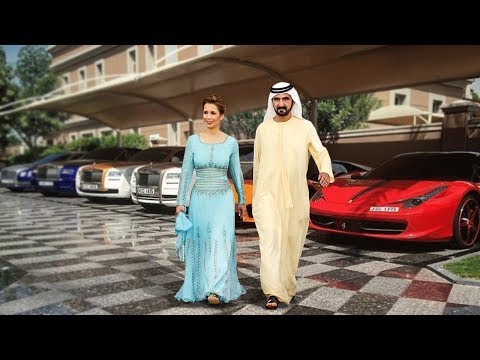
The IHC facilitates international aid and development projects by providing logistical, storage, and operational facilities and services to relevant international humanitarian NGOs and UN bodies, and other aid groups. IHC was formed by the merger of Dubai Aid City and Dubai Humanitarian City to serve as a hub for the humanitarian aid and development community and better respond to their needs. IHC is a non-profit, non-political organization, chaired by Jordanian Princess Haya bint al-Hussein, wife of Sheikh Mohammed bin Rashid Al Maktoum, Vice-President and Prime Minister of the United Arab Emirates. The UAE has a small but steadily growing agricultural sector, despite the country's harsh desert conditions. Modern irrigation techniques, water from aquifers deep underground, and desalination have made possible the cultivation of large areas. The government supports agriculture through the free distribution of farm lands, extensive price guarantees and subsidies.

Such efforts resulted in a fourfold increase in agricultural production in the country between 1975 and 1998, with an average annual growth rate of 17 percent. The Ministry of Agriculture and Fisheries oversees regulations and activities in this sector. There are more than 800 companies working in the agriculture sector, mainly in the richest emirates, Abu Dhabi and Dubai. The Syria Recovery Trust Fund is another recent foremost international engagement that exemplifies the UAE's willingness to embrace multilateralism and cooperate with the western world in case of overlapping political interests.
Denmark, Sweden, Finland, the UK, Japan, France, Italy, Turkey and Netherlands joined the agreement in 2014. The young oil monarchy's humanitarian assistance to Palestine and Palestinian refugees continues today. Saket Burman comes next on the list having a net worth of USD1.7 billion.

He is a United Kingdom citizen who lived most of his business life in the UAE, he particularly lives in the city of Dubai. He is a member of the Burman clan that founded one of India's largest consumer goods companies "Dabur". 12.4 percent of the company's share was part of his inheritance after the demise of his father in 2015. Saket also established an IT company which he later sold out, that company is currently into general trading.

He also owns a couple of assets which include landed properties, as well as financial investments. The UAE has one of the world's largest oil reserves, 94 percent of which is located in the Emirate of Abu Dhabi. Thanks to the revenue from the oil industry, the country has experienced a rapid modernisation and is now one of the wealthiest countries on the planet. In addition to the oil revenues, the financial metropolis of Dubai is also a major driver for the economy.
As you can read in the short interview below with our Trade & Invest commissioner Massoud Biouki, this rapid growth unfortunately has its downsides, especially when looking at sustainability and human rights. Oil has made Dubai one of the richest states or emirates in the world. Even though Dubai has little oil, the black gold has made the city rich. In less than 50 years, Its robust economy has made Dubai an affluent state admired around the world.

The oil industry and forward-thinking business strategies have enabled Dubai to become a global economic powerhouse. In 2009 the UAE government established the Office for the Coordination of Foreign Aid to coordinate all country's humanitarian efforts. OCFA was set up in collaboration with the UN Office for the Coordination of Humanitarian Affairs and is chaired by Sheikh Hamdan bin Zayed al-Nahyan, the ruler's representative in Abu Dhabi's Western Region.
According to OCFA's first annual report , government and non-government bodies distributed USD 2.7 billion to 92 countries in 2009. The amount is equal to 1 percent of the country's gross national income , exceeding the UN target of 0.7 percent. 95 percent of the 1,500 contributions were unconditional grants to humanitarian, development, and charity projects. Asia received USD 2.3 billion , while Africa received USD 273.3 million .

The rest was divided among Europe, the Americas, Oceania, and multilateral organizations. Other major recipients included Pakistan (USD 0.5 billion), Afghanistan (USD 0.4 billion), and the Occupied Palestinian Territories (USD 289.5 million). Substantial development assistance has increased the UAE's stature among recipient states, including Arab and Muslim states.

Since the mid-1990s, the UAE, especially Dubai, has transformed itself into a major tourist destination. The city embarked on an aggressive marketing campaign to brand and sell Dubai and the UAE as a unique tourist spot. The city's assets, including its architecture, modern transport system, high-class hotels, shopping malls, year-round sunshine, beaches and deserts and other features, such as Ski Dubai and Atlantis, attract millions of visitors a year. Though officially never recognized, prostitution and sex tourism are part of the 'underground' economy and among the popular attractions. There were considerable increases in imports of manufactured goods, machinery, and transportation equipment, together amounting to 70 percent of total imports. Another major foreign exchange source is the Abu Dhabi Investment Authority, which controls the separate investments of the wealthy Emirate of Abu Dhabi and manages about USD 360 billion in overseas investments and an estimated USD 900 billion in assets.


